A forward helix piercing is one of the most delicate and eye-catching cartilage piercings you can get. Sitting at the front curve of the upper ear, it frames the face and works beautifully on its own or as part of a curated ear stack. Whether you are researching your first cartilage piercing or adding to an existing collection, this guide covers everything you need to know: placement, pain level, healing time, jewelry options, aftercare, and cost.
If you are ready to book an appointment, use our piercing studio finder to locate a reputable shop near you.
What Is a Forward Helix Piercing?
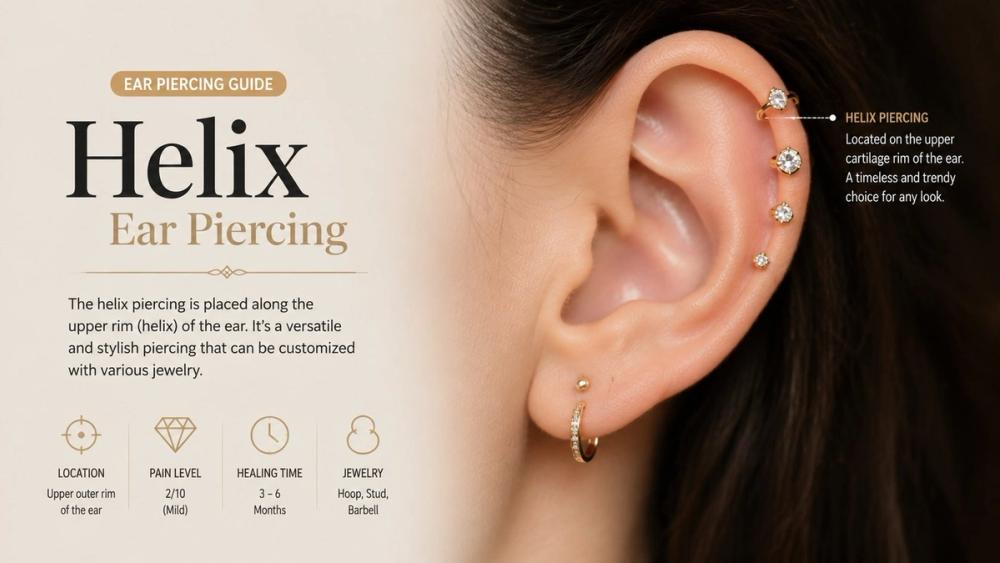
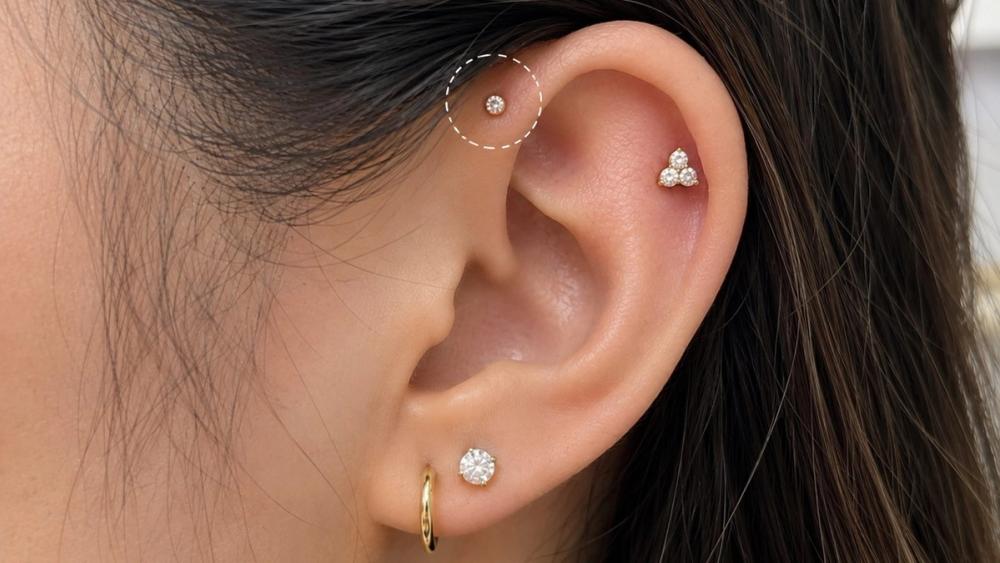
The forward helix is the small ridge of cartilage at the front of the upper ear, just above the tragus and in front of the standard helix rim. A piercing placed through this ridge is called a forward helix piercing. As shown in the cover image, the jewelry typically sits at the top-front corner of the ear, drawing attention without overpowering the rest of your ear layout.
Because the area is small and the cartilage is relatively thin, forward helix piercings are usually done with small-gauge jewelry, most commonly a labret stud with a tiny gemstone or decorative end. Placement precision matters: too high or too low and the stud can sit awkwardly against the ear's natural curves. An experienced piercer will mark the spot with your anatomy in mind and let you approve the placement before the needle goes through.
Forward Helix vs Standard Helix Piercing
People often confuse the forward helix with a regular helix piercing. The difference is location:
- Location: The forward helix sits on the front curve of the upper ear cartilage, near the face; the standard helix is on the outer rim of the upper ear cartilage.
- Common jewelry: Forward helix — labret stud or tiny gemstone; standard helix — stud, hoop, or ring.
- Pain level: Moderate for both forward helix and standard helix piercings.
- Healing time: 3–9 months for both piercings.
- Best for: Forward helix — curated ear stacks and a subtle accent; standard helix — a hoop-friendly statement look.
Both are cartilage piercings, so aftercare is similar: keep them clean, avoid pressure while sleeping, and do not change jewelry too early.
Does a Forward Helix Piercing Hurt?
Pain is subjective, but most people rate a forward helix piercing as a quick, sharp pinch followed by a dull throbbing sensation. Because the cartilage in this area is thin, the piercing itself is usually over in a second or two. The clamp and needle placement can feel more intense than the actual piercing for some people.
Afterward, you can expect:
- Swelling and redness for the first few days
- Tenderness when touching the area or sleeping on that side
- Possible bruising around the piercing site
The first week tends to be the most uncomfortable. If pain worsens after the initial healing period, or if you notice excessive swelling, heat, or discharge, contact your piercer or a healthcare provider.
Forward Helix Healing Time & Aftercare
Healing time: 3 to 9 months, with an average of around 6 months. Some people heal faster; others need closer to a year, especially if the piercing is bumped or slept on.
Daily Aftercare Routine
- Clean twice daily with a sterile saline wound wash. Spray the front and back of the piercing, let it sit for 30–60 seconds, then gently pat dry with clean gauze or a paper towel.
- Do not twist or rotate the jewelry. This was old advice and can damage healing tissue.
- Avoid touching the piercing with unwashed hands.
- Keep pressure off the area. Use a travel pillow or sleep on the opposite side.
- Avoid swimming pools, hot tubs, lakes, and oceans until the piercing is fully healed.
- Keep hair, headphones, hats, and earbuds away from the piercing as much as possible.
For detailed aftercare standards, the Association of Professional Piercers is a trusted industry resource.
Best Jewelry for Forward Helix Piercings
Because the forward helix is a small area, jewelry is usually delicate and low-profile. Common choices include:
- Labret studs with a flat back: The most popular starter jewelry. Comfortable, secure, and easy to clean.
- Threadless or push-fit studs: Common in high-end piercing studios because they stay tight without threading.
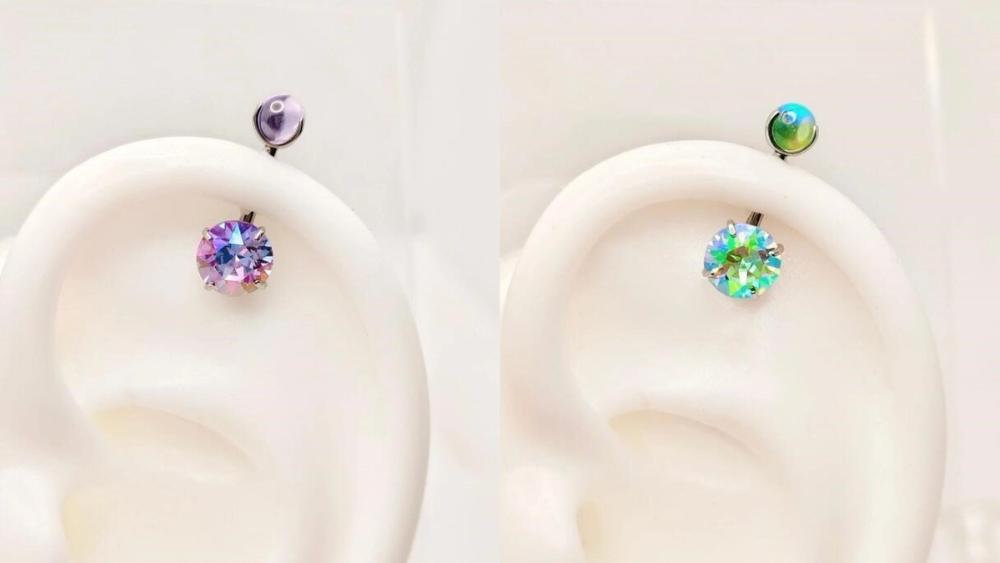
- Tiny gemstones: CZ, opal, or genuine diamond ends are favorites.
- Mini hoops or rings: Usually only recommended after the piercing has fully healed, because rings move more and can irritate fresh cartilage.
Most forward helix piercings are done at 16 gauge or 18 gauge, with a post length that accommodates initial swelling. Your piercer should downsize the post after the swelling goes down, typically around 4–8 weeks.
How Much Does a Forward Helix Piercing Cost?
Prices vary by location, studio reputation, and jewelry quality. In the United States, expect to pay:
- Piercing fee: $30–$60 per piercing
- Jewelry: $20–$100+ depending on material (implant-grade titanium, 14k gold, etc.)
- Total: roughly $50–$150 for one forward helix
Double or triple forward helix setups will cost more because each piercing is charged separately. Do not choose a studio based on price alone. Look for implant-grade jewelry, sterile equipment, and a piercer who follows APP-style safety standards.
Forward Helix Piercing Pros & Cons
Pros
- Subtle, elegant placement that frames the face
- Works well in curated ear stacks
- Wide variety of tiny, decorative jewelry options
- Generally quick to pierce
Cons
- Can be uncomfortable to sleep on during healing
- Cartilage is prone to bumps and irritation if snagged
- Healing can take 6–12 months
- Not ideal for very small ears with limited forward helix ridge space
Frequently Asked Questions
What is the difference between a forward helix and a regular helix?
A forward helix sits on the front curve of the upper ear cartilage, near the face. A regular helix sits on the outer rim of the ear.
How long does a forward helix piercing take to heal?
Most forward helix piercings heal in 3 to 9 months, with 6 months being typical. Full healing depends on aftercare, anatomy, and whether the piercing is bumped or slept on.
Can I wear a hoop in my forward helix?
You can, but only after the piercing is fully healed. Hoops move more than studs and can delay healing or cause irritation bumps if introduced too early.
Is a forward helix piercing painful?
Most people describe it as a sharp pinch followed by throbbing. It is usually rated as moderate pain and is over quickly because the cartilage is thin in that area.
How do I know if my forward helix piercing is infected?
Signs of infection include increasing redness, warmth, severe swelling, thick yellow or green discharge, and fever. Mild crusting and clear lymph fluid are normal during healing. When in doubt, see your piercer or a doctor.
Conclusion
A forward helix piercing is a stylish, low-profile cartilage piercing that suits a wide range of ear shapes and personal styles. Success comes down to three things: precise placement by an experienced piercer, high-quality jewelry, and consistent aftercare. Give it the full 3–9 months it needs to heal, avoid sleeping on it, and resist the urge to change jewelry early.
Ready to take the next step? Find a piercing studio near you and book a consultation with a professional piercer who can assess your anatomy and recommend the perfect forward helix placement.
Disclaimer: This article is for general informational purposes only and is not medical advice. Always consult a licensed professional piercer or healthcare provider for guidance specific to your body.