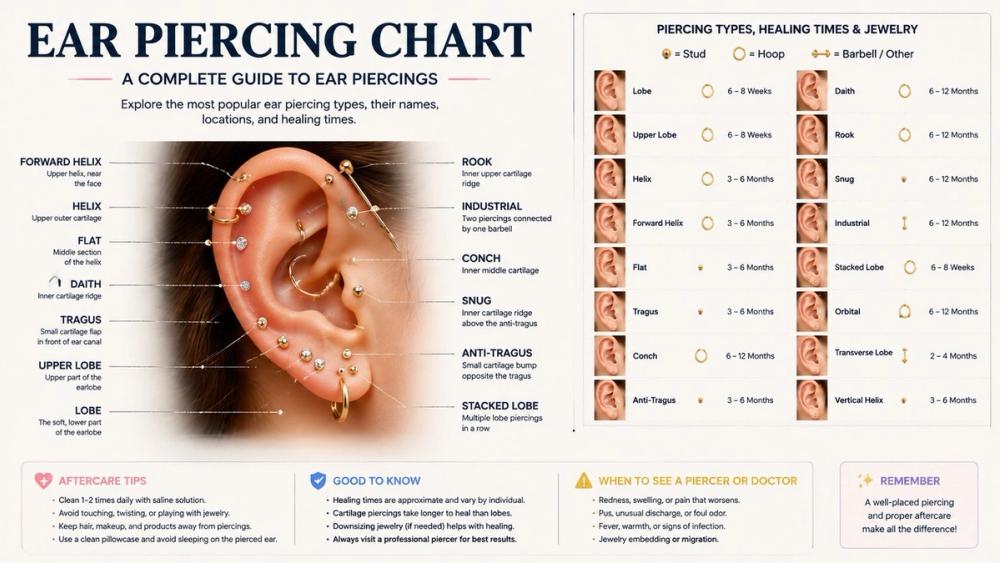
Your Complete Ear Piercing Chart
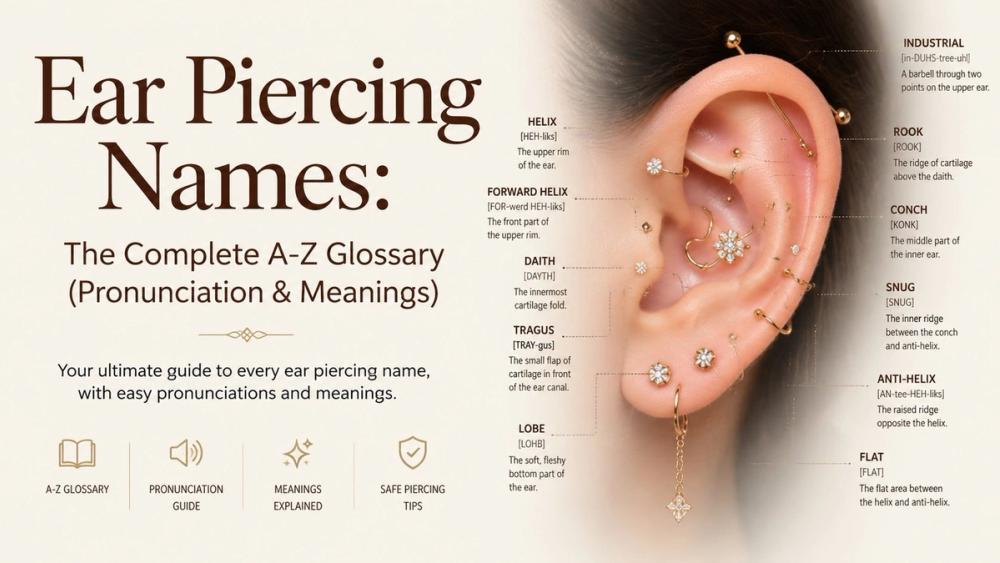
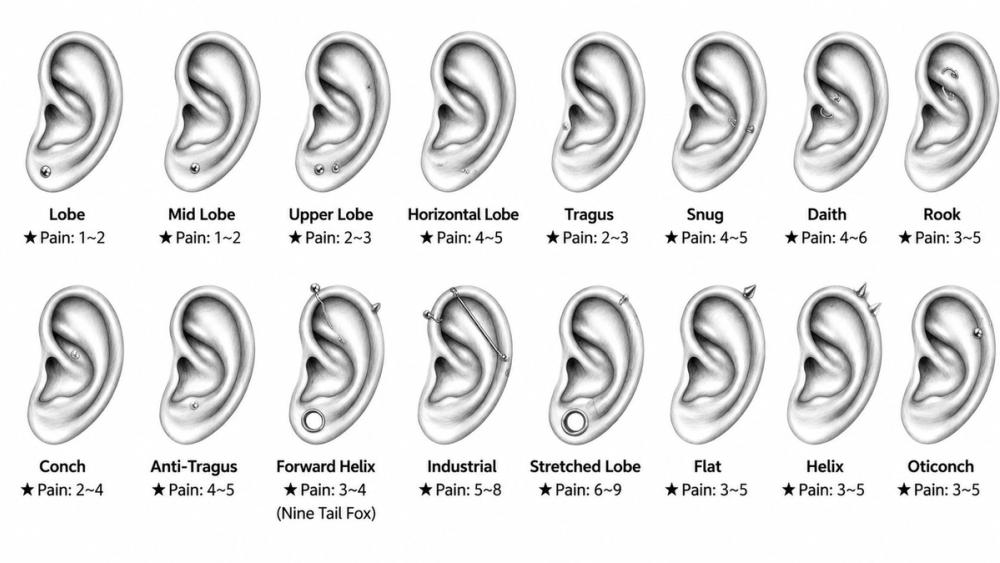
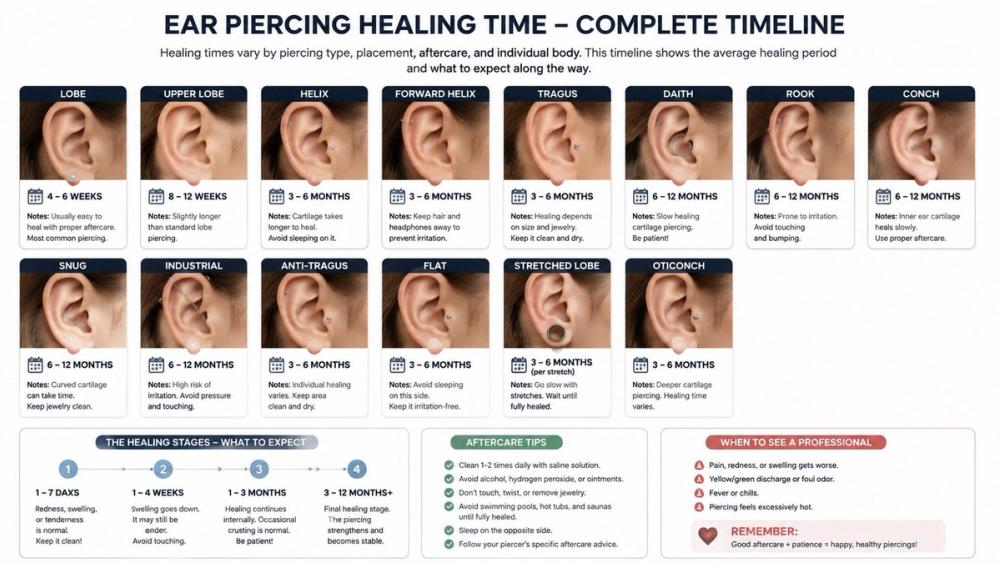
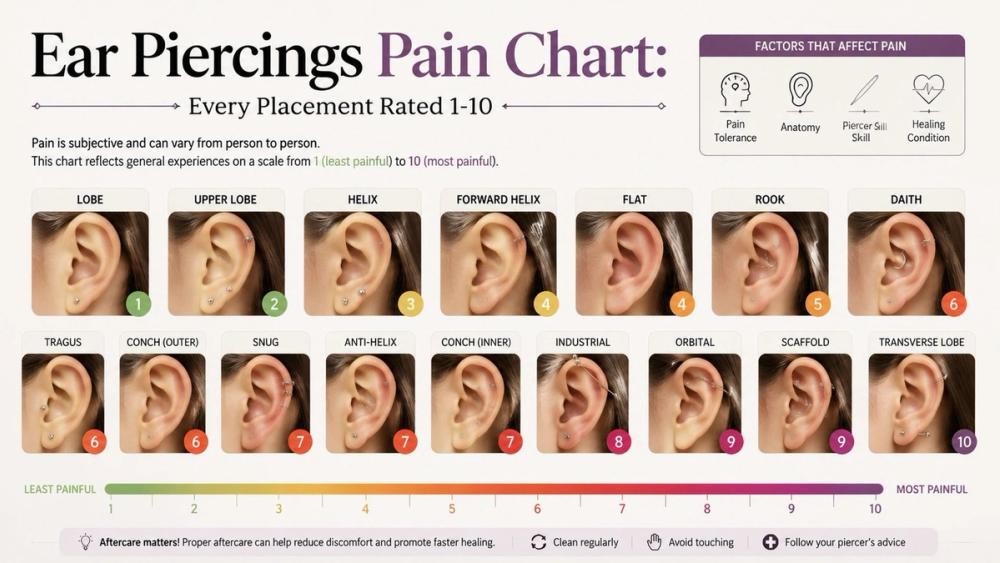
The ear is the most versatile canvas in body art. Depending on how your anatomy is mapped, you have at least 13 distinct ear piercing placements to choose from - each with its own look, pain level, healing timeline, and jewelry style. This ear piercing chart walks through every common placement so you can plan your next piercing (or your next ten) with confidence.
If you want help choosing which placement fits your style, pain tolerance, and ear anatomy, read our complete guide to the types of ear piercings.
Every placement falls into one of two zones: soft tissue (the fleshy lobe) and cartilage (everything else). That single distinction explains almost everything about your experience - why a lobe heals in weeks while a conch takes months, and why cartilage comes with what piercers call the "healing tax."
How to Read This Ear Piercing Chart
Before the placement-by-placement breakdown, here is what the numbers mean:
- Pain (1-10): an average rating for an experienced piercer using a single-use needle. Your own experience will vary.
- Healing time: a range. Actual healing depends on aftercare, your body, and the jewelry you wear.
- Tissue: soft tissue (lobe) heals fast and hurts less; cartilage heals slowly and needs more patience.
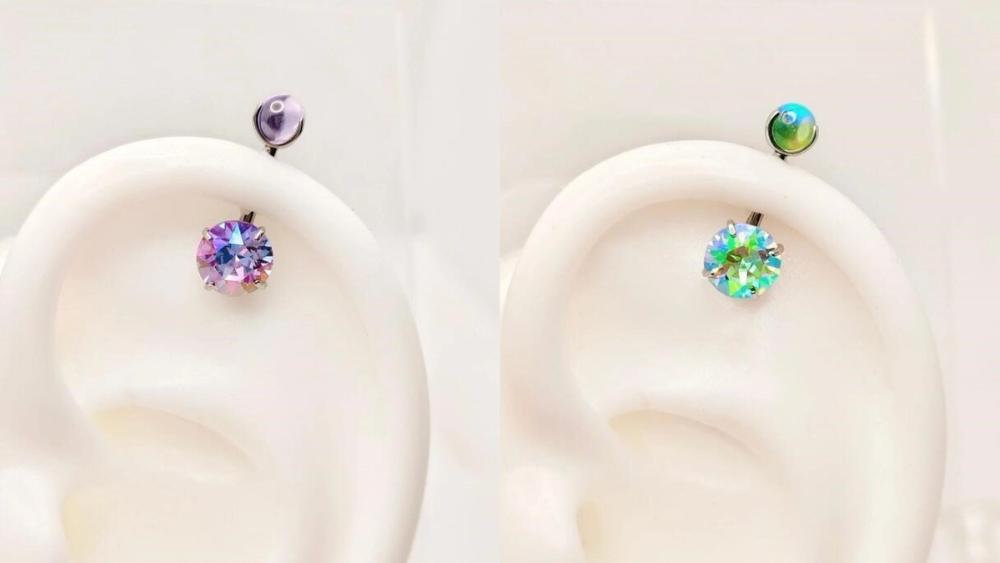
- Best jewelry: the starter piece your piercer will likely fit, usually a flat-back labret in implant-grade titanium.
Ear Piercing Types, Mapped
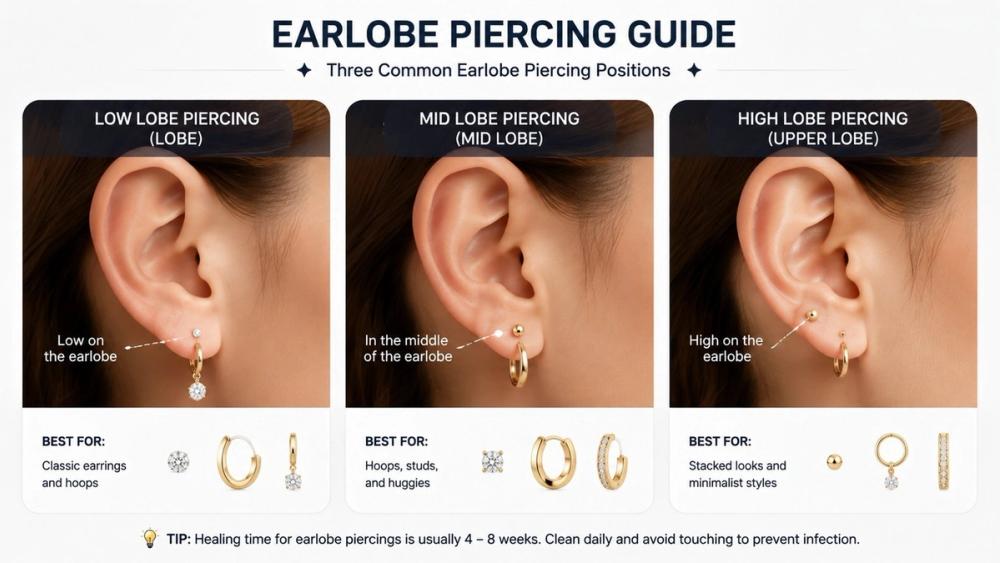
Standard Lobe
The classic. A stud or hoop placed through the soft lower earlobe - almost everyone's first piercing and the foundation of most ear stacks.
- Location: center of the earlobe
- Pain: 1-2 / 10
- Healing time: 6-8 weeks
- Best jewelry: 20G or 18G studs, huggies, or small hoops
- Good for: all ages and any pain tolerance
Upper Lobe & Stacked Lobes
A second, third, or fourth piercing placed higher on the lobe, just below where the cartilage begins. Stacked lobes build a clean, layered look and heal almost as fast as a standard lobe.
- Location: upper soft lobe, in a vertical line
- Pain: 2-3 / 10
- Healing time: 6-10 weeks
- Best jewelry: 20G or 18G studs and small huggies
- Good for: building a lobe stack gradually over time
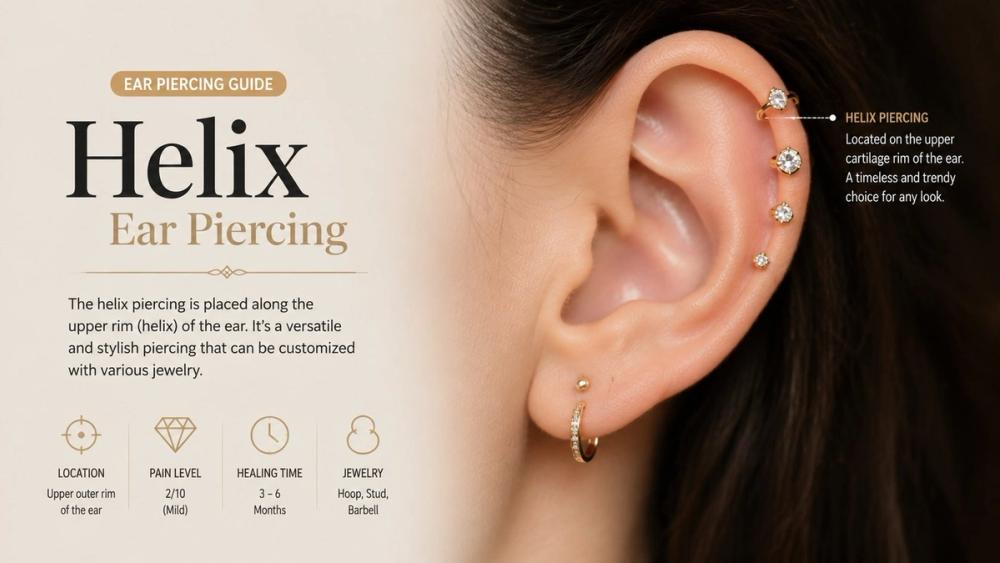
Helix
The upper outer rim of the ear - the most popular cartilage piercing and the anchor of most curated ears. It works with studs, hoops, and clickers, and a "double" or "triple helix" rows beautifully.
- Location: outer upper rim of the ear
- Pain: 4 / 10
- Healing time: 6-9 months
- Best jewelry: 16G flat-back labret, hinged clicker, or threadless stud
- Good for: a first cartilage piercing
Forward Helix
The cartilage just above where the ear meets the head, directly above the tragus. A delicate, dainty placement that often comes in clusters of two or three.
- Location: front of the upper rim, near the face
- Pain: 5 / 10
- Healing time: 6-9 months
- Best jewelry: 16G flat-back labret or tiny threadless stud
- Good for: triple stacked clusters and subtle curation
Flat (Scapha)
The flat panel of cartilage between the helix rim and the inner conch. Plenty of canvas for a single statement stud or a small cluster.
- Location: flat cartilage "scapha" of the upper ear
- Pain: 4-5 / 10
- Healing time: 6-9 months
- Best jewelry: 16G flat-back labret or threadless stud
- Good for: showcasing one bold piece
Tragus
The small, raised flap of cartilage in front of the ear canal. Tucked and modern, it adds dimension near the face - though it can interfere with earbuds during the first months of healing.
- Location: flap over the ear canal opening
- Pain: 4-5 / 10
- Healing time: 6-12 months
- Best jewelry: 16G flat-back labret, small clicker
- Good for: adding interest close to the face
Anti-Tragus
The cartilage bump opposite the tragus, just above the earlobe. Less common, but it pairs beautifully with a tragus for symmetry.
- Location: ridge above the lobe, across from the tragus
- Pain: 6-7 / 10
- Healing time: 6-12 months
- Best jewelry: 16G flat-back labret or small hinged clicker
- Good for: mirroring a tragus in an inner-ear stack
Conch
The large, shell-shaped bowl of cartilage in the center of the ear. One of the most versatile placements - it takes studs, hoops, and even a ring that spans the bowl.
- Location: center bowl of the ear (inner and outer conch)
- Pain: 6-7 / 10
- Healing time: 6-12 months
- Best jewelry: 16G flat-back labret or a fitted hoop
- Good for: a bold centerpiece in a curated ear
Daith
The innermost fold of cartilage just above the ear canal. It has drawn attention for anecdotal migraine relief, though clinical evidence remains limited. Not every ear has the anatomy for it.
- Location: innermost cartilage fold above the canal
- Pain: 6-8 / 10
- Healing time: 6-12 months
- Best jewelry: 16G curved barbell or small hoop
- Good for: a hidden, distinctive placement
Rook
The thick fold of cartilage above the daith, on the upper inner ear. Dense tissue makes it one of the more intense placements, but the result is striking.
- Location: upper inner cartilage fold
- Pain: 7-8 / 10
- Healing time: 9-18 months
- Best jewelry: 16G curved barbell or small hoop
- Good for: an experienced cartilage collector
Snug
A horizontal piercing through the antihelix on the inner rim. Thick, folded cartilage makes this one of the most painful and slowest-healing ear piercings.
- Location: inner rim, parallel to the helix
- Pain: 7-9 / 10
- Healing time: 12-18 months
- Best jewelry: 16G curved barbell
- Good for: a rare, editorial look (earns patience)
Industrial
Two piercings - usually two points on the upper helix - connected by a single straight barbell. Technically two holes, but planned as one composition.
- Location: two points on the upper cartilage, joined by one bar
- Pain: 6-8 / 10
- Healing time: 9-18 months
- Best jewelry: 14G or 16G industrial barbell
- Good for: a bold, architectural statement
Auricle
The flat outer rim between the helix and the lobe. Often grouped with helix placements, it is a flexible spot for studs and small hoops.
- Location: middle of the outer rim
- Pain: 4 / 10
- Healing time: 6-9 months
- Best jewelry: small hoops or studs
- Good for: filling gaps in a stacked ear
Planning Your Ear Stack With the Chart
A good rule of thumb: start with your lobe, then add one cartilage piercing at a time and let it fully heal before the next. Cartilage heals slowly, and healing several at once multiplies the care routine. If you are deciding between soft tissue and cartilage as a starting point, our guide to lobe vs cartilage piercing breaks down the trade-offs.
Use the chart above as a planning tool. Pick placements that suit your pain tolerance and lifestyle (for example, skip the tragus if you live in earbuds), then map them onto your own ear before you book.
Jewelry & Aftercare Notes
For any fresh piercing, start with implant-grade titanium (ASTM F-136) or implant-grade steel. Cheap mystery-metal starter jewelry is the most common cause of irritation bumps and slow healing. Our guide to choosing safe jewelry materials covers what to look for.
Clean twice a day with a sterile saline solution and keep hands off. Cartilage needs months of consistent care - our ear piercing aftercare guide for the first 6 weeks covers the daily routine step by step. Bringing kids in? See what parents should know about kids ear piercing.
Frequently Asked Questions
Which ear piercing hurts the least?
The standard lobe is the gentlest, rated about 1-2 out of 10 - a quick pinch that fades almost immediately. Upper and stacked lobes are nearly as easy.
Which ear piercing hurts the most?
Among common placements, the snug and rook rank highest (7-9 / 10) because they pass through thick, folded cartilage. The industrial is also intense since it is two passes in one session.
How long do cartilage piercings take to heal?
Most cartilage placements take 6-12 months, and denser ones like the rook, snug, and industrial can run 12-18 months. Lobe piercings heal in 6-8 weeks by contrast.
Can I get multiple ear piercings at once?
You can, but piercers usually recommend no more than three or four at a time and prefer mixing just one cartilage with lobes. Healing several cartilage piercings simultaneously is harder on your body and your routine.
What jewelry is safest for a new piercing?
A flat-back labret in implant-grade titanium is the safest, most low-profile starter for almost every placement. Avoid hoops on fresh cartilage - they move and irritate the healing channel.
Find a Professional Studio Near You
Once your ear piercing chart is planned, the last step is choosing who does it. A safe piercing comes from a licensed professional using a single-use needle - never a gun. Browse vetted studios and find an ear piercing studio near you to book with confidence.