If you're thinking about getting your ears pierced — or adding another stud to an existing stack — the first thing to figure out is which type of ear piercing suits you. From the classic lobe to advanced cartilage placements like the daith and industrial, every style has its own pain level, healing timeline, and jewelry options. This guide breaks down the most popular types of ear piercings so you can walk into the studio knowing exactly what to ask for.
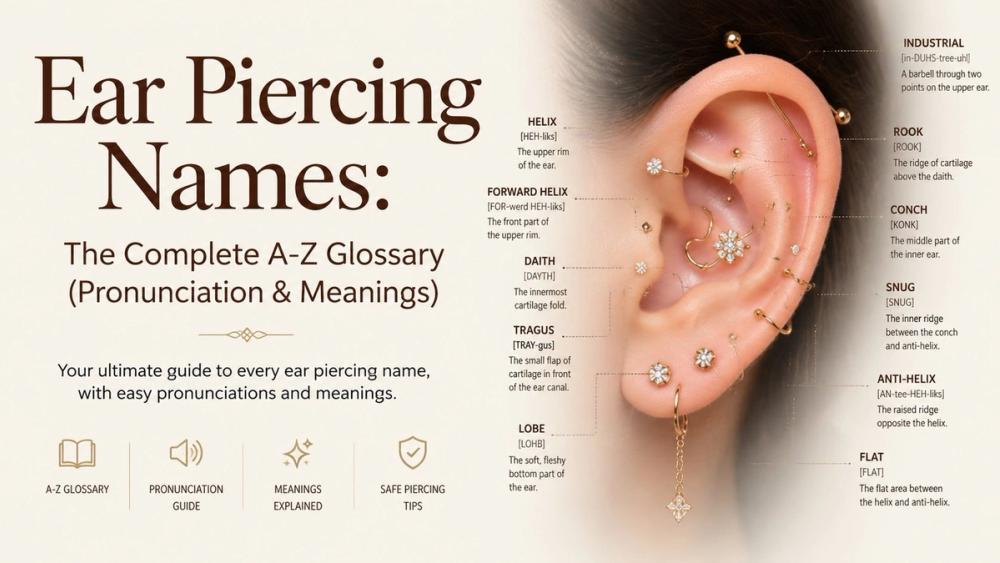
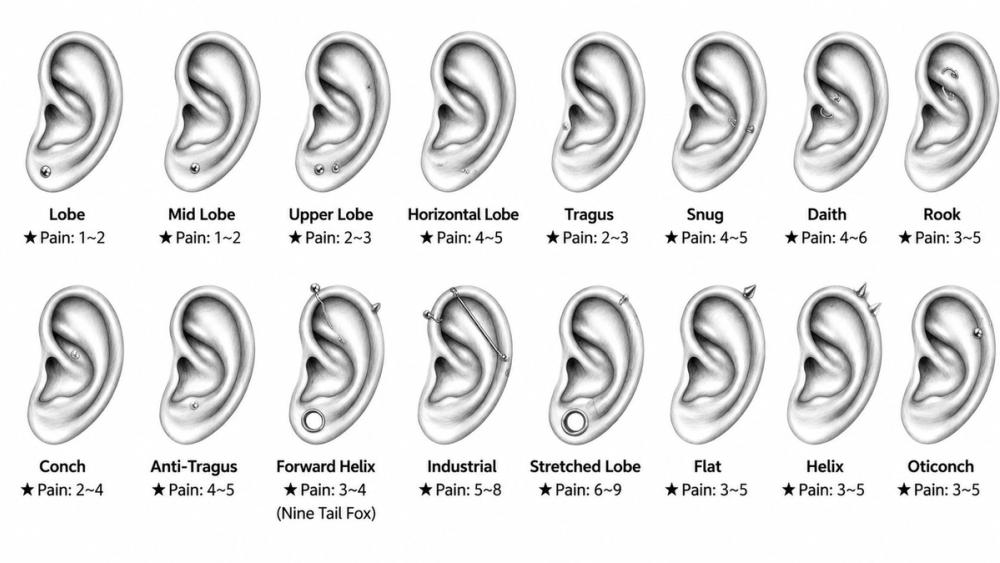
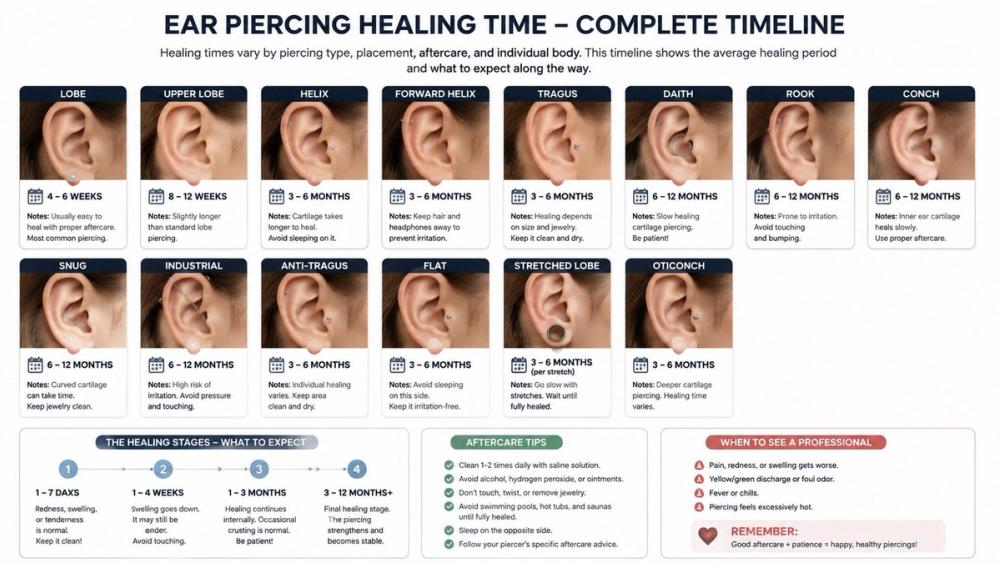
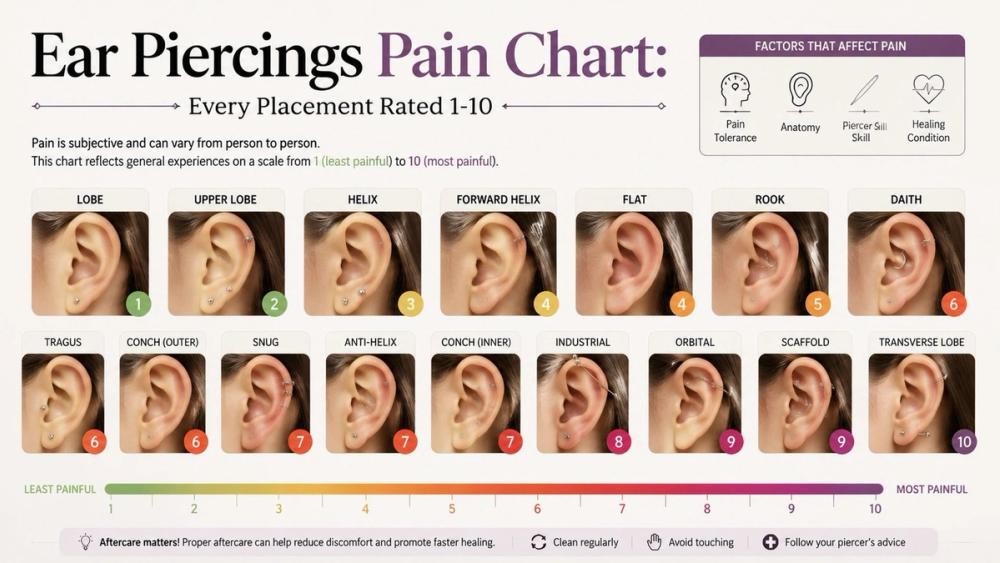
For a quick visual map of where each piercing sits on the ear, see our ear piercing chart.
Lobe Piercings
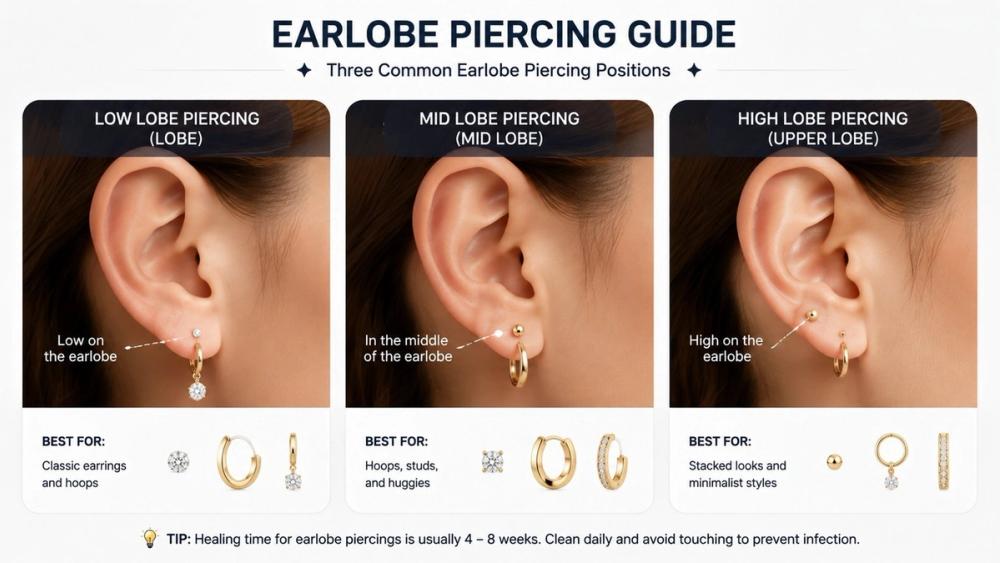
Lobe piercings sit in the soft tissue at the bottom of the ear. They are the most common starter piercings because the tissue is thick but not cartilage, which usually means less pain and faster healing.
Standard Lobe
The classic single hole in the center of the earlobe. Most people's first piercing is a standard lobe, and it's the easiest placement to heal.
**Placement: **Center of the fleshy lower earlobe.
**Pain level: **2/10 — usually a quick pinch.
**Healing time: **6 to 8 weeks.
**Jewelry: **Implant-grade titanium studs, 14k gold studs, or small hoops.
**Best for: **First-timers, kids' ear piercings, and anyone who wants a low-maintenance option.
Upper Lobe
Positioned higher on the lobe, closer to where the cartilage begins. It works well as a second or third lobe piercing and is a stepping stone toward cartilage styles.
**Placement: **Top edge of the earlobe, just below the helix rim.
**Pain level: **2/10 to 3/10.
**Healing time: **6 to 10 weeks.
**Jewelry: **Small studs or huggie hoops.
Stacked Lobe
Two or more lobe piercings lined up vertically or diagonally. The stacked look is popular for curated ears because it creates a neat column of jewelry.
**Placement: **Multiple holes on the lobe, usually planned as a set.
**Pain level: **2/10 to 3/10 per piercing.
**Healing time: **6 to 8 weeks for each hole.
**Jewelry: **Tiny studs, flat-back labrets, or matching huggies.
Helix and Outer Cartilage Piercings
These piercings sit along the outer rim of the ear and tend to hurt a little more than lobe piercings because they pass through cartilage. They also take longer to heal, so patience and consistent aftercare are key.
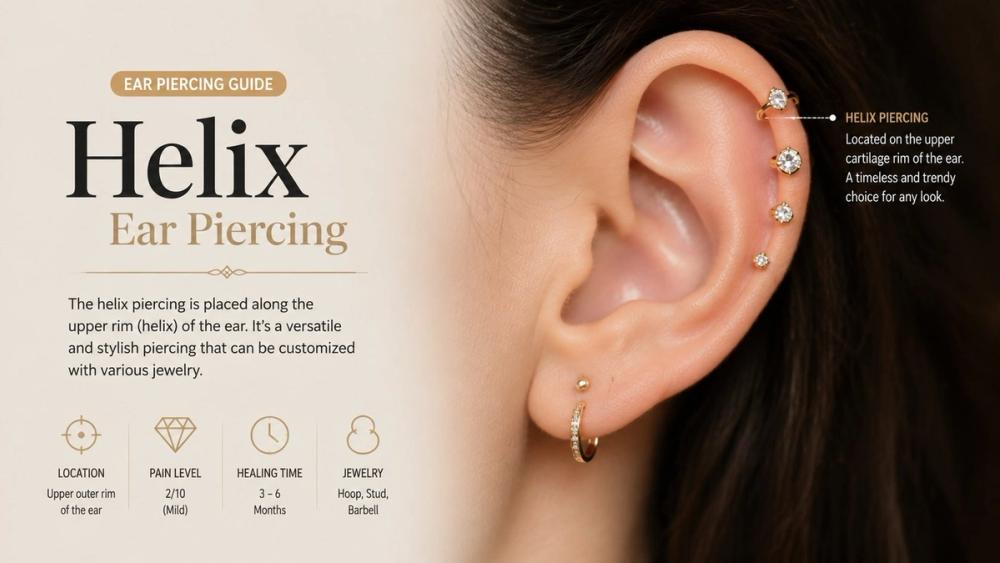
Helix
A helix piercing goes through the upper outer cartilage rim. It's one of the most popular cartilage piercings and pairs nicely with lobe piercings.
**Placement: **Upper outer cartilage rim.
**Pain level: **4/10 to 5/10.
**Healing time: **3 to 6 months.
**Jewelry: **Studs, small hoops, or flat-back labrets.
Forward Helix
Located on the front-facing cartilage curve closest to the face, the forward helix is subtle but adds a refined accent to curated ears.
**Placement: **Front curve of the upper ear, near where the helix meets the temple.
**Pain level: **5/10 to 6/10.
**Healing time: **3 to 9 months.
**Jewelry: **Tiny studs or small hoops.
Industrial
An industrial connects two helix piercings with a single straight barbell, creating a bold horizontal line across the top of the ear.
**Placement: **Two holes on the upper helix connected by one barbell.
**Pain level: **6/10 to 8/10 because of the double cartilage puncture.
**Healing time: **6 to 12 months.
**Jewelry: **A straight barbell, typically 14g or 16g.
**Best for: **People whose ear anatomy can support the bar without pressing on the scapha.
Auricle
The auricle sits on the outer cartilage rim, roughly halfway between the lobe and the helix. It is a midpoint placement that frames the ear nicely.
**Placement: **Outer rim of the ear, midway up.
**Pain level: **4/10 to 5/10.
**Healing time: **3 to 9 months.
**Jewelry: **Hoops or studs.
Inner Cartilage Piercings
Inner cartilage piercings sit inside the ear's cup and folds. They are more anatomy-dependent than outer piercings, and some — like the daith and snug — require a piercer to check whether your ear shape has enough tissue to support them.
Tragus
The tragus is the small pointed flap of cartilage that sticks out in front of the ear canal. A stud or tiny hoop here is stylish and easy to show off.
**Placement: **Center of the tragus flap.
**Pain level: **4/10 to 6/10.
**Healing time: **3 to 6 months.
**Jewelry: **Small studs, flat-backs, or tiny hoops.
Anti-Tragus
Opposite the tragus, the anti-tragus sits on the small cartilage bump above the earlobe. It's a rarer choice and requires enough cartilage thickness to be viable.
**Placement: **Cartilage bump opposite the tragus, above the lobe.
**Pain level: **5/10 to 7/10.
**Healing time: **6 to 12 months.
**Jewelry: **Curved barbells or small hoops.
Conch
Named after the shell-like cup in the center of the ear, a conch piercing goes through the inner cartilage. It can be placed in the inner conch (deeper cup) or outer conch (closer to the rim).
**Placement: **Inner cartilage bowl of the ear.
**Pain level: **6/10 to 8/10.
**Healing time: **6 to 12 months.
**Jewelry: **Studs, labrets, or large hoops that wrap the ear rim.
Daith
A daith piercing sits in the innermost fold of cartilage, just above the ear canal. It is often chosen for its discreet, tucked-in look.
**Placement: **Innermost cartilage fold above the ear canal.
**Pain level: **6/10 to 8/10 because of the dense cartilage.
**Healing time: **6 to 12 months.
**Jewelry: **Curved barbell or captive bead ring.
Rook
The rook sits on the ridge between the inner and outer conch, in the fold above the daith. It is a popular choice for curated ears because it fills the upper inner ear nicely.
**Placement: **Cartilage fold between inner and outer conch.
**Pain level: **6/10 to 8/10.
**Healing time: **6 to 12 months.
**Jewelry: **Curved barbell or small hoop.
Snug
A snug piercing goes through the inner cartilage ridge, parallel to the outer helix rim. It is highly anatomy-dependent and not everyone has enough raised cartilage for it.
**Placement: **Inner cartilage ridge, parallel to the outer helix.
**Pain level: **7/10 to 9/10.
**Healing time: **6 to 12 months.
**Jewelry: **Curved barbell.
How to Choose the Right Type of Ear Piercing
With so many placements available, the best piercing for you depends on a few practical factors:
Pain Tolerance
Lobe and upper lobe piercings are the gentlest options. If you are nervous about pain, start there. Cartilage piercings pinch more and may throb for a few hours afterward, but the discomfort is short-lived for most people.
Healing Commitment
Lobe piercings heal in 6 to 8 weeks. Cartilage piercings can take 6 to 12 months. If you do not want a long aftercare routine, stick with lobe placements or a single helix.
Lifestyle
Side sleepers, people who wear over-ear headphones, and athletes who wear helmets or headbands should be careful with helix, industrial, and snug piercings. These placements are more likely to be bumped or pressed during daily activities.
Ear Anatomy
Not every ear can support every piercing. A professional piercer can check whether you have enough cartilage, the right fold shape, or enough space for an industrial barbell. Never force a piercing that your anatomy cannot support.
Jewelry Style
If you love hoops, placements like helix, auricle, and conch show hoops beautifully. If you prefer a minimal stud look, lobe, tragus, and forward helix are ideal starting points.
Aftercare Basics for Any Ear Piercing
Good aftercare protects your investment and helps avoid infections or bumps. Clean the piercing twice a day with sterile saline solution, avoid touching it with unwashed hands, and do not twist or rotate the jewelry. Keep hair products, makeup, and headphones away from fresh piercings, and avoid swimming pools or hot tubs until the piercing is fully healed.
For placement-specific pain and healing timelines, refer back to our ear piercing chart.
Frequently Asked Questions
What is the least painful type of ear piercing?
The standard lobe piercing is usually the least painful, rating around 2/10 for most people. Upper lobe and stacked lobe piercings are only slightly more intense.
What is the most painful type of ear piercing?
Inner cartilage piercings like the snug, daith, rook, and conch tend to hurt the most, often rating 7/10 to 9/10. Industrial piercings are also high on the pain scale because they involve two cartilage punctures in one session.
Which ear piercing heals the fastest?
Lobe piercings heal fastest, usually in 6 to 8 weeks. Cartilage piercings take significantly longer because cartilage has less blood flow.
Can you get multiple ear piercings at once?
Yes, but most piercers recommend limiting the session to 2 or 3 new piercings so your body can heal without overload. Avoid getting both sides of a pair piercing — like both tragus piercings — at the same time if you sleep on your side.
What is the best ear piercing for beginners?
A standard lobe piercing is the best choice for beginners. It is low-pain, heals quickly, and gives you a chance to learn proper aftercare before moving on to cartilage.
What type of jewelry is safest for new piercings?
Implant-grade titanium (ASTM F-136), niobium, and solid 14k or 18k gold are considered the safest materials for fresh piercings. Avoid nickel, plated metals, and low-quality fashion jewelry while healing.
No matter which type of ear piercing you choose, the most important decision is the studio. A clean, professional environment with experienced piercers reduces risks and gives you the best result. Find a trusted local studio and book a consultation if you are unsure which placement suits your anatomy.